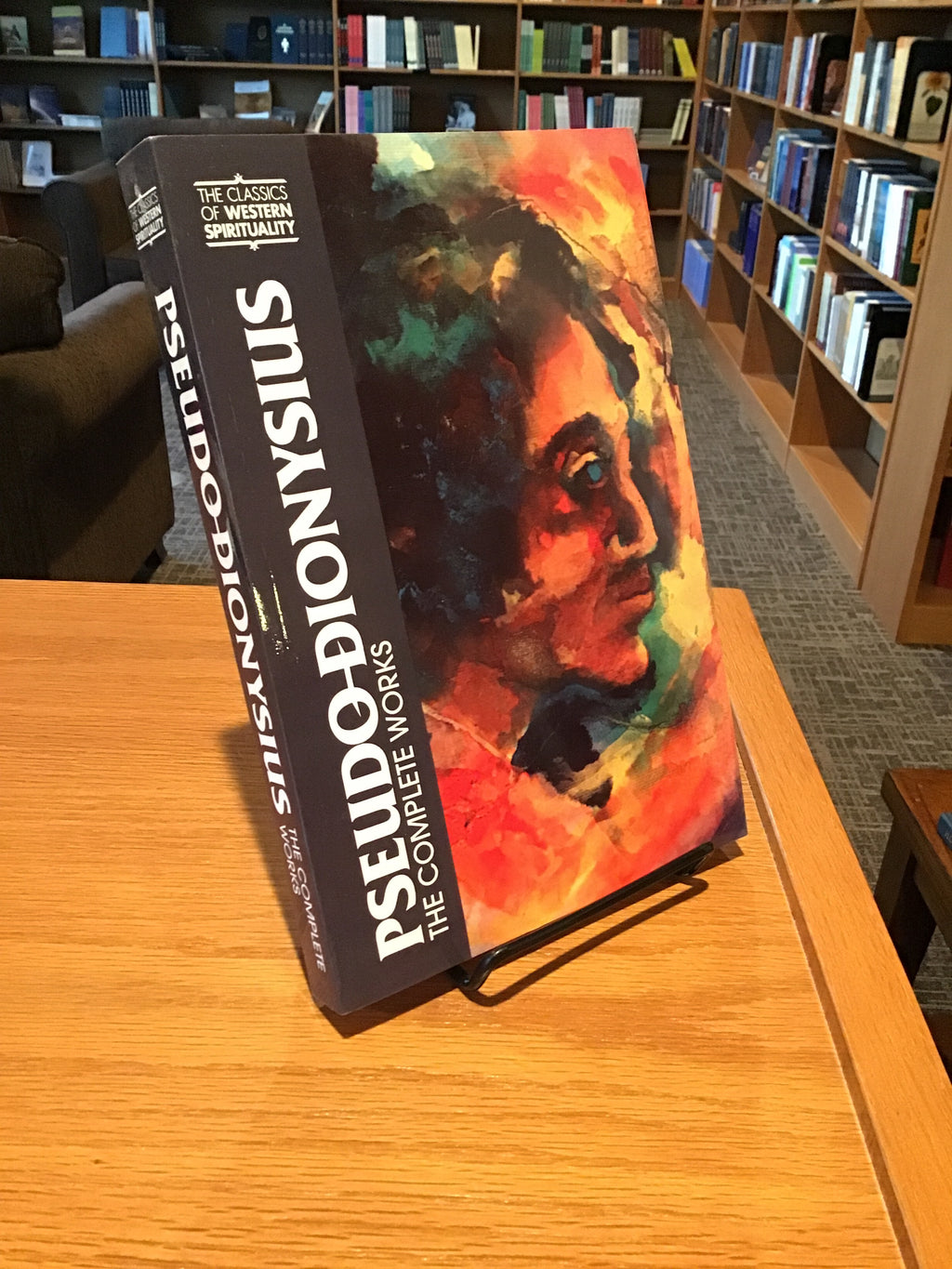
If you want to understand the metaphysical foundations of Orthodox theology, this is the book for you.
Dionysius establishes two non-negotiable realities
(1) God is beyond being and essence - truly transcendent
(2) yet truly participable through His divine processions (goodness, life, wisdom, light).
Creatures do not participate in the divine essence, they participate in what truly comes from God.
This is the metaphysical backbone of the 'The Triads' by St. Gregory Palamas. His articulation of the essence-energies distinction, his defense of real deification, and even his meta-mathematical logic of unity (also espoused in Lossky's Dogmatic Theology that you can buy at the STM bookstore) are not innovations. They are clarifications of Dionysius and his framework, found in this book.
Dionysius distinguishes between the superessential Godhead from the participable divine names -- Western Thomistic metaphysics and absolute divine simplicity become very difficult to accept from this assertion alone. If all divine operations are simply identical with essence in an undifferentiated way, Dionysius' repeated insistence on real processions and real participation loses its force.
What also becomes clear reading this is the importance of Orthodox ordo theologiae: theology begins with the concrete revelation of the divine Persons and their operations - not with abstract essence -- a framework carried on by St. Dumitru Staniloae and Fr. Florovsky. The East continues Dionysius by preserving both transcendence and real communion. Attempts to collapse this goes against the very distinctions Dionysius goes to such great lengths to guard. The unity of God is not threatened by the multiplicity of divine names -- it provides the groundwork for understanding theosis in a way that is neither sentimental nor speculative.
Highly recommend!